01/08/2025

Via privata Molina 80/7 – 80/9, Vignate (MI)

02 95361055

info@fitex.it

Textile rotary blade cutters are an essential type of cutting machines that are highly valued for some special features, such as precision, efficiency, and versatility. Thanks to their ergonomic design, they enable them to make clean and precise cuts on a wide range of materials with ease, making them indispensable for all textile professionals.
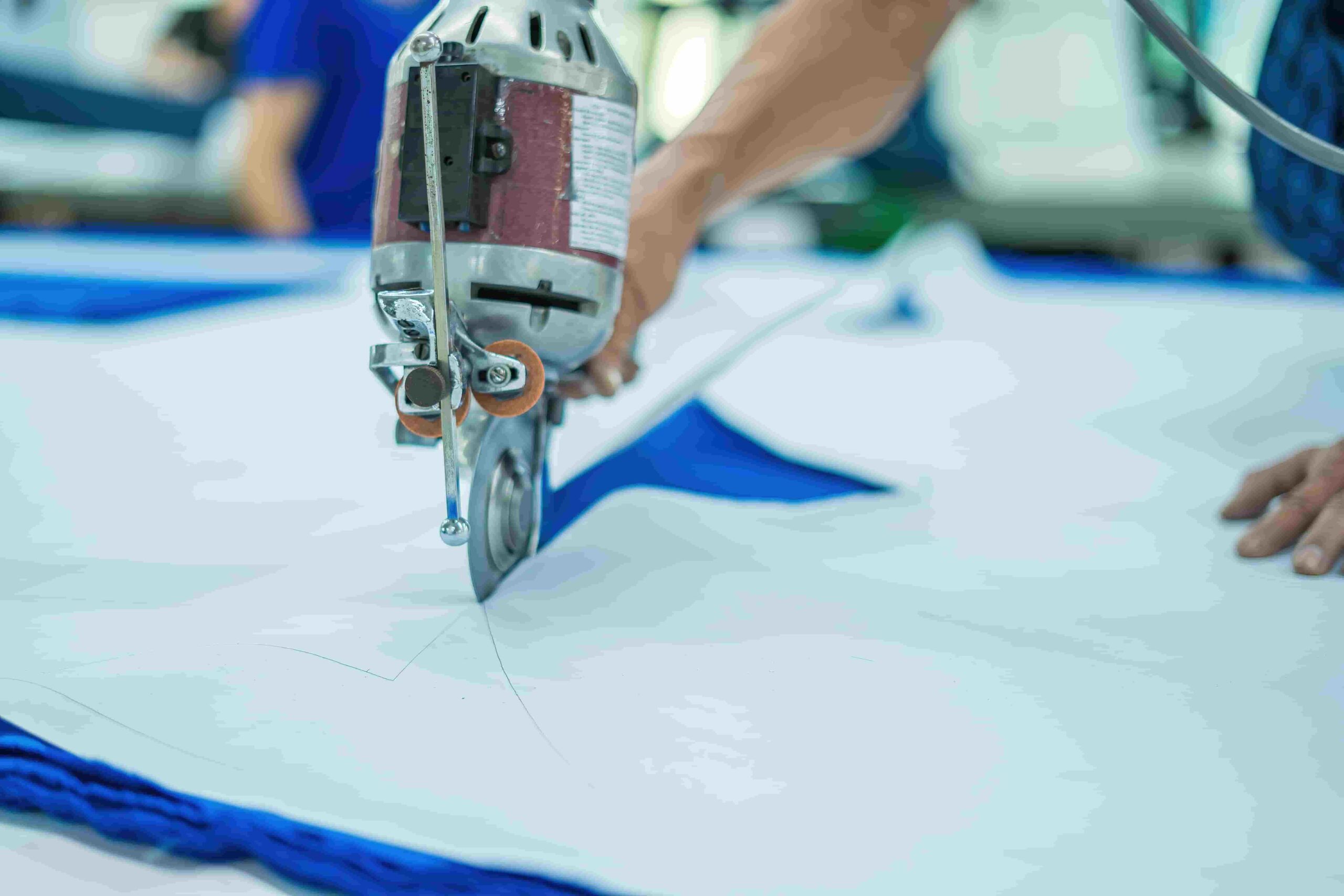
Rotary fabric cutters consist primarily of a sharp circular blade mounted on an ergonomic handle that allows the operator to maneuver it with ease. The principle of operation is based, precisely, on the rotation of the blade itself, which is pushed through the fabric allowing for continuous, clean cuts.
Rotating blades come in various sizes, generally from 18 to 60 millimeters in diameter, although the standard size is 45 mm. Smaller blades are preferred for intricate and detailed cuts where it is necessary to work on small pieces of fabric by cutting very tight curves, while larger blades are commonly used for long, straight cuts across multiple layers of fabric.
The blade is typically made of carbon steel or stainless steel, materials that ensure a long life cycle and excellent sharpness durability. They can also be treated with special coatings to improve their resistance to rust and wear.
The use of a rotary blade occurs after careful preparation of the fabric on the cutting surface, usually a self-repairing mat, which is useful in protecting the underlying surface and prolonging the life of the blade due to their ability to close the cuts automatically. Next, the operator grips the handle of the rotating blade so that constant, controlled pressure can be applied while pushing the blade through the fabric. The rotation of the blade allows for reduced friction, easier cutting, and smooth movements, reducing hand and wrist fatigue.
In order to maintain their optimal performance, rotary blades need to be maintained regularly. In fact, it is necessary to keep it sharp and to replace it in case of beveling in order to avoid uneven cuts and tearing of the fabric. It is also important to clean the blade regularly in order to remove any fabric residue or dust that may accumulate during use.
Rotary blade fabric cutters are available in several types designed to meet specific cutting needs.
Widely used at both amateur and professional levels, manual rotary cutters feature a circular blade that rotates when pushed through the fabric, ideal for curved, detailed and linear cuts. Versions with ergonomic handles offer greater comfort during prolonged use, reducing hand and wrist fatigue, thus making them preferred for intensive, long-duration work.
Some cutters have serrated blades, which are very useful for creating decorative edges or for processing materials that tend to fray easily, while others have scallop blades, which produce a wavy edge that is particularly popular for some special decorations. Double-bladed cutters, on the other hand, allow two parallel lines to be cut at the same time, greatly speeding up the creation of fabric strips, to be used for quilting, for example.
Powered by a motor, electric cutters allow large amounts of fabric to be cut quickly and accurately, minimizing the physical strain on resources used in the textile industry and professional tailoring. Some models have built-in guides, which help maintain a straight and precise cutting line, proving ideal for beginner users or those who need extra care in linear cuts.
Finally, pressure cutters, which work by applying downward pressure to the blade during cutting, perfect tools for working with thick or layered fabrics.
Each type of rotary blade cutter offers specific advantages, making it suitable for different applications in the textile industry. Choosing the ideal cutter, therefore, depends on the type of fabric to be cut, the type of cut required, and the user’s personal preferences. The variety of options available ensures that there is a suitable rotary cutter for every need, from simple edge trimming to large-scale production in industrial environments.
In order to best guide you, given the huge range of offerings on the market, we recommend that you contact a reputable and experienced manufacturer or dealer in the field. This will enable you to receive proper advice and all the assistance you need in choosing the rotary cutter blade that best suits your needs and business goals.
In this regard, we at Fitex have specialized in the trade and production of spare parts, mechanical parts, accessories and complex solutions for the textile industry for over 40 years.
With more than 50 thousand items in our catalog, you can choose from a wide range of rotary cutter blades from the best brands, capable of guaranteeing a clean, accurate and clean cut on all types of material, with impeccable results every time.
Fitex guarantees you fast delivery, advanced technical advice and total support at all stages, from model selection to after-sales.
Contact us directly to request the ergonomic sewing chair model you are looking for and to receive a personalized quote and dedicated support.
Andrea Ferroli
Nadia Leonarduzzi


Every day, a promotion on an item we have in stock: join our mailing list and take advantage of the benefits!
Already know which item you need?
Order it directly from our app, available for Android and iOS.