01/08/2025

Via privata Molina 80/7 – 80/9, Vignate (MI)

02 95361055

info@fitex.it

In the world of industrial sewing, every detail makes a difference. From the main machinery to small tools, everything contributes to making the work more precise, faster and more reliable. Among these tools are staplers, which are often underestimated, but are crucial in many stages of textile sewing.
If you’re wondering what exactly they are, what they are used for, and how to choose the right one for your business, you’ve come to the right place. This guide will take you step by step through the world of textile staplers.
Edited by
Andrea Ferroli
Nadia Leonarduzzi
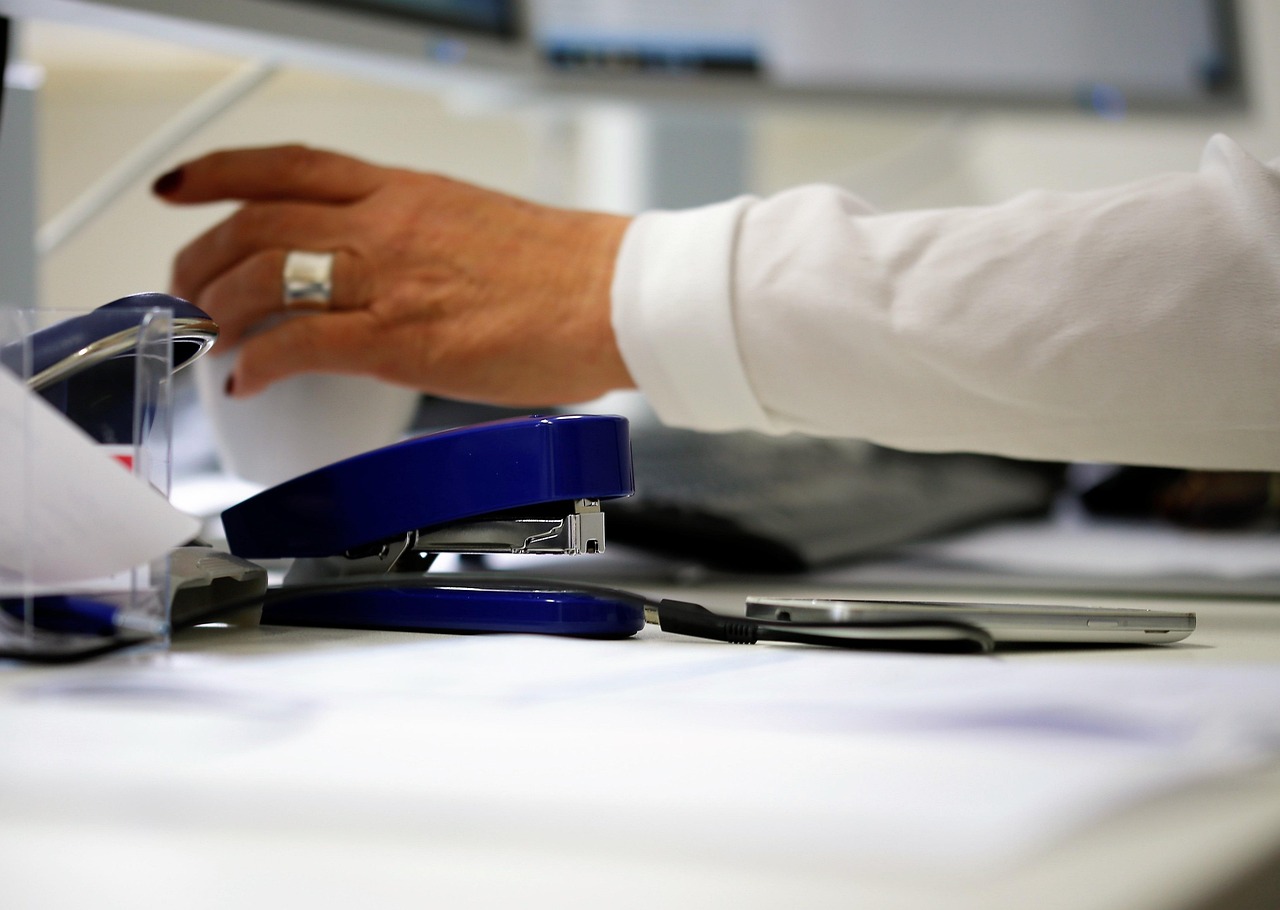
Staplers are tools used to fasten two or more materials together by inserting metal staples. In industrial sewing, they are used at various stages of processing: from preassembly of fabrics, padding, and linings, to wrapping and packaging.
Their function is simple but essential: to quickly and securely join elements that are then to be sewn, processed, or transported. They can work on fabrics, leather, cardboard, plastics, and technical materials, thus adapting to numerous uses in the fashion, furniture, and technical-industrial sectors.
One of the main criteria for choice is the mode of use. Staplers are divided into:
A practical example? In a packaging workshop, a manual stapler may be needed for prototypes or samples; an automatic one, on the other hand, is indispensable in a continuous production line.
The principle of operation is quite simple: a staple is forcefully pushed into the material by an internal blade, which closes its ends, firmly securing the components.
In textiles, they can be used for: temporarily securing layers of fabric before stitching, but also securing labels or padded components as well as assembling technical parts (e.g., reinforcements or synthetics).
Some staplers include pressure regulators to accommodate more delicate fabrics or different thicknesses.
Although the terms are similar, the functions change. Let’s see what the main differences are.
Staplers join materials together using metal staples.
Staplers, as the word suggests, sew with thread, creating a permanent binding.
Then there are staplers, which use a folding and pressing mechanism(often used in packaging or metalworking).
In industrial sewing, staplers provide a temporary and quick fix, seamers a permanent finish, and seamers are used in more specific areas.
So what are the advantages of using staplers in industrial sewing?
Here are a few:
In large-scale production, an automatic stapler can significantly increase efficiency and lower operating costs.
Among the factors to consider is first and foremost the type of processing: are you interested in small volume or industrial production?
Another important point is to understand what materials are to be processed: delicate fabrics, upholstered or technical?
Not forgetting, then, ergonomics: if the operator/operator will be using it for many hours, it is worth making different assessments.
In addition, it is important to understand compatibility with existing equipment and to know what is the reliability and availability of spare parts, an aspect to understand how to make your economic investment last over time.
Fitex S.R.L. offers a range of selected professional staplers for the textile industry, suitable for all types of production needs.
Contact our staff to receive free technical advice or request information on available models.
Our team is at your disposal to find the most suitable solution for your laboratory or plant
Want to learn more?
➡️Discover our in-depth look at professional sewing machines
Let Us advise you!


Every day, a promotion on an item we have in stock: join our mailing list and take advantage of the benefits!
Already know which item you need?
Order it directly from our app, available for Android and iOS.