01/08/2025

Via privata Molina 80/7 – 80/9, Vignate (MI)

02 95361055

info@fitex.it

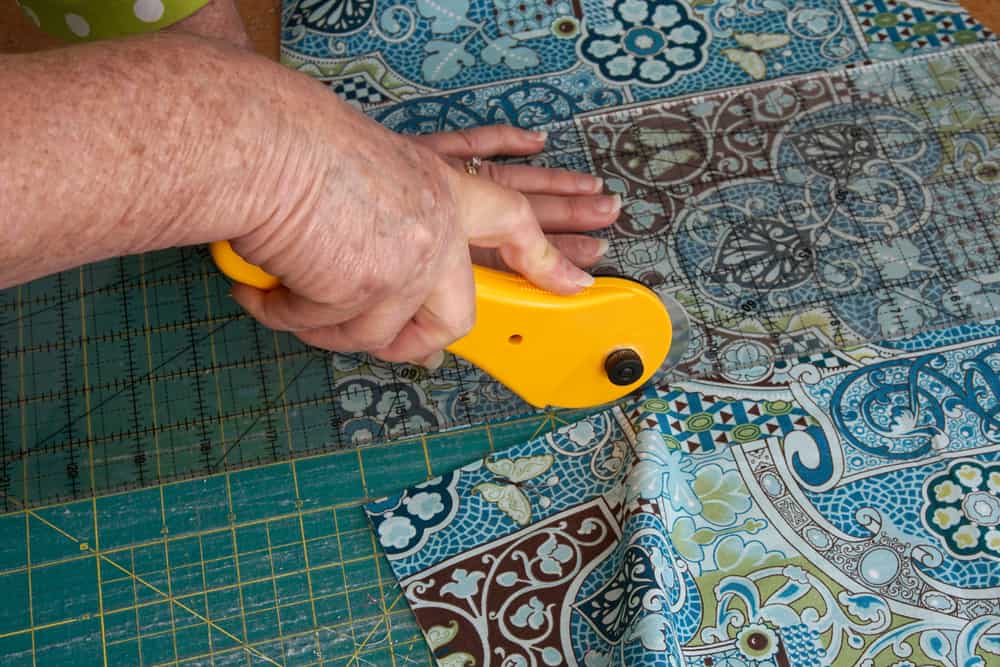
In the world of tailoring, the rotary cutter blade has become an indispensable ally in achieving precise and fast cuts on fabrics. First introduced by Olfa in the 1970s, it has revolutionized the way people work with fabrics, offering an effective and ergonomically advantageous solution compared to traditional scissors.
The rotary cutter blade is an essential tool in the textile industry, designed to offer precision and ease of use when cutting fabrics of different types and thicknesses. This tool is distinguished by its sharp circular blade mounted on an ergonomic handle, which allows for clean, precise cuts with smooth, controlled movements.
While very simple in its operation, a rotary cutter blade has a very effective output. The blade is usually made of high-quality tempered steel, designed to maintain a long-lasting sharpness that allows it to precisely cut through several layers of fabric at once. The cutter is equipped with a mechanism that allows the blade to rotate freely when pushed along the surface of the fabric. This rotary motion allows the operator to cut following straight or curved lines with ease, ensuring a clean, fray-free edge.
A key element for proper operation of the rotary cutter blade is the support of the cutting surface. It is advisable to use a self-repairing mat specially designed for rotary cutters, which protects the underlying surface and extends the life of the blade. These mats are often marked with grids and measurements to help maintain alignment and accuracy when cutting.
Ergonomics are another crucial aspect in the operation of a rotary cutter blade. The handles are designed to provide a comfortable and secure grip, reducing hand fatigue during prolonged cutting sessions. Some models can be equipped with non-slip handles to further improve operator control.
The applications of the rotary cutter blade in the textile industry are extremely varied. It is primarily used to prepare fabric pieces for making clothing, accessories, bedding and more. Its ability to cut precisely through multiple layers of fabric makes it ideal for large-scale production, where speed and accuracy are essential for saving time and materials.
In addition to garment production, the rotary cutter blade also finds use in areas such as quilting and patchwork, where precise and detailed shapes need to be cut to create intricate and artistically decorated designs. Its versatility in cutting different types of fabrics, including cotton, wool, silk, and synthetic fabrics, makes it a perfect tool for creative professionals and artisans working with textile materials.
In conclusion, the rotary cutter blade represents an excellent combination of precision, ease of use and versatility in the textile industry. Thanks to its innovative design and ability to cut precisely through several layers of fabric, it has become a key tool for improving the efficiency and quality of work done in tailoring workshops, garment factories, and textile artisan communities.
Rotary cutter blades can vary mainly in their size and shape. We distinguish two main types of rotary cutter blades:
In addition, blades can also be categorized by specific intended use. Namely:
The choice of blade depends primarily on the type of fabric you intend to cut and the type of tailoring or textile work you are doing. It is also important to consider the quality of the blade material and ease of replacement to ensure optimal and durable performance of the rotary cutter over time.
There are many prestigious brands that offer excellent models of rotary cutter blades. In particular, we can mention some internationally renowned brands, such as Olfa, Martelli, Fiskars, Gingher, Clover or TrueCut.
In order to orient yourself in the best possible way, given the vast number of models on the market, we recommend that you contact a reliable and experienced manufacturer or dealer in the field. This way you will be able to receive proper advice and all the assistance you need in choosing the rotary cutter blade best suited to your needs and business goals.
In this regard, we at Fitex have specialized in the trade and production of spare parts, mechanical parts, accessories and complex solutions for the textile industry for over 40 years.
With a stock of more than 50 thousand items, in our catalog you can choose from a wide range of rotary cutter blades of the best brands, capable of guaranteeing a clean, accurate and clean cut on all types of material, with impeccable results every time.
Our strengths, particularly appreciated in the market, are quick delivery, advanced technical advice and total customer support.
Contact us directly to request the ergonomic sewing chair model you are looking for and to receive a personalized quote and dedicated assistance.
Andrea Ferroli
Nadia Leonarduzzi


Every day, a promotion on an item we have in stock: join our mailing list and take advantage of the benefits!
Already know which item you need?
Order it directly from our app, available for Android and iOS.